Competitive Analysis

Forest

a gamified focus timer but does not help in planning or habit building beyond sessions.

Todoist

a structured task manager but struggles to adapt to user behavior or give guidance.

Habitica

a gamified habit tracker but relies on user effort with no smart productivity insights.

Trello

a visual task board but depends on manual maintenance and offers no personal productivity assistance

Notion

an all in one workspace but requires heavy manual setup and lacks adaptive task guidance.

Microsoft To Do

Organizes tasks well but needs constant manual input and offers no smart productivity support.

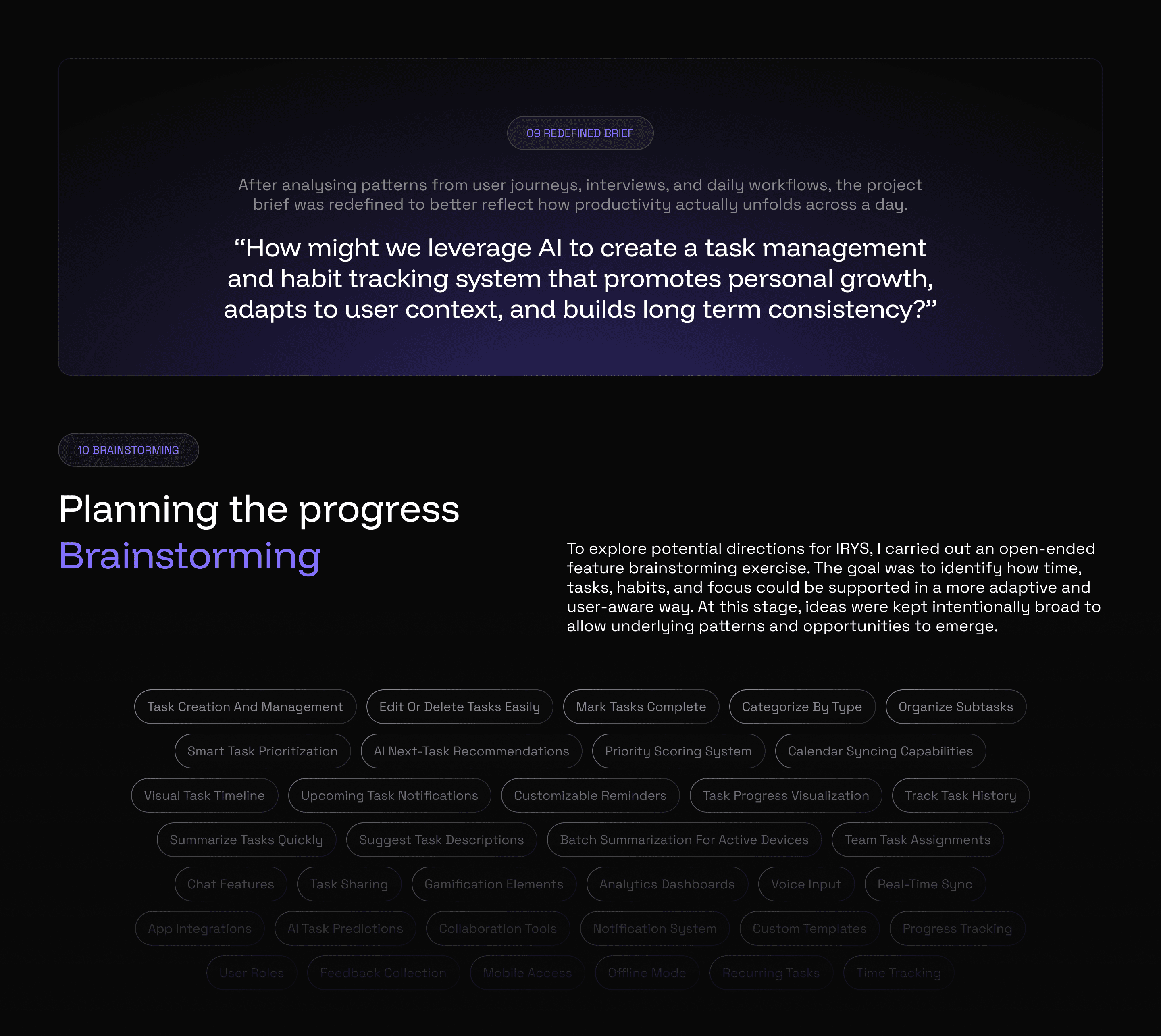
Feature Ideation

AI based task suggestions

Priority sorting

Pomodoro timer

Habit tracking

Adaptive streak

reflection prompts

insights and recommendations

Achievement system

Calendar sync

Cross Platform Integration

Themes

Engaging Visualization

Task management

Deadlines and Reminders

AI Estimation

Spotify Integration

Montetization

Whoop Integration

Literature Review

Fogg Behavior Model (FBM)

The FBM by B.J. Fogg states that a behavior occurs only when three elements meet at the same time: Motivation, Ability, and a Prompt. If any of these is weak or missing, the desired behavior will not happen. This highlights the importance of timing prompts correctly and reducing friction for users.

Implementation intentions are specific “if–then” plans linking a situation to an action. A large meta-analysis of 94 studies showed that creating these plans has a medium-to-large effect on successfully completing goals (effect size around 0.65). This works best when users already have a strong desire to achieve the goal.

Flow State and Deep Work

Cal Newport and Mihaly Csikszentmihalyi describe flow as a state of focused productivity where distractions fade and efficiency rises significantly. Achieving flow requires task clarity, low distractions, and structured time blocks.

Personalization through On-device AI

Recent models show that personalization improves adoption and sustained usage of productivity tools. On-device AI supports privacy and lowers latency.

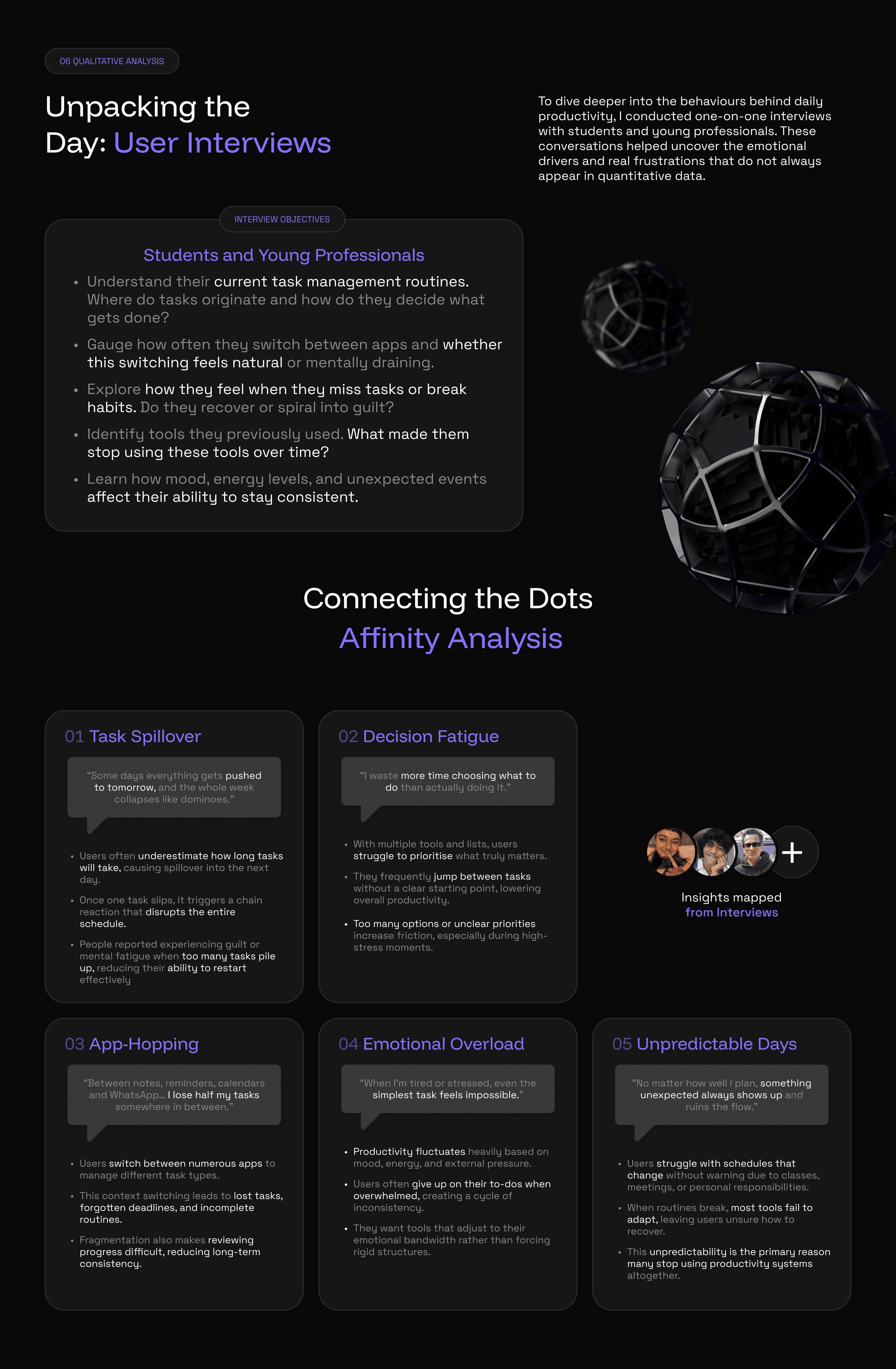
Interview Insights

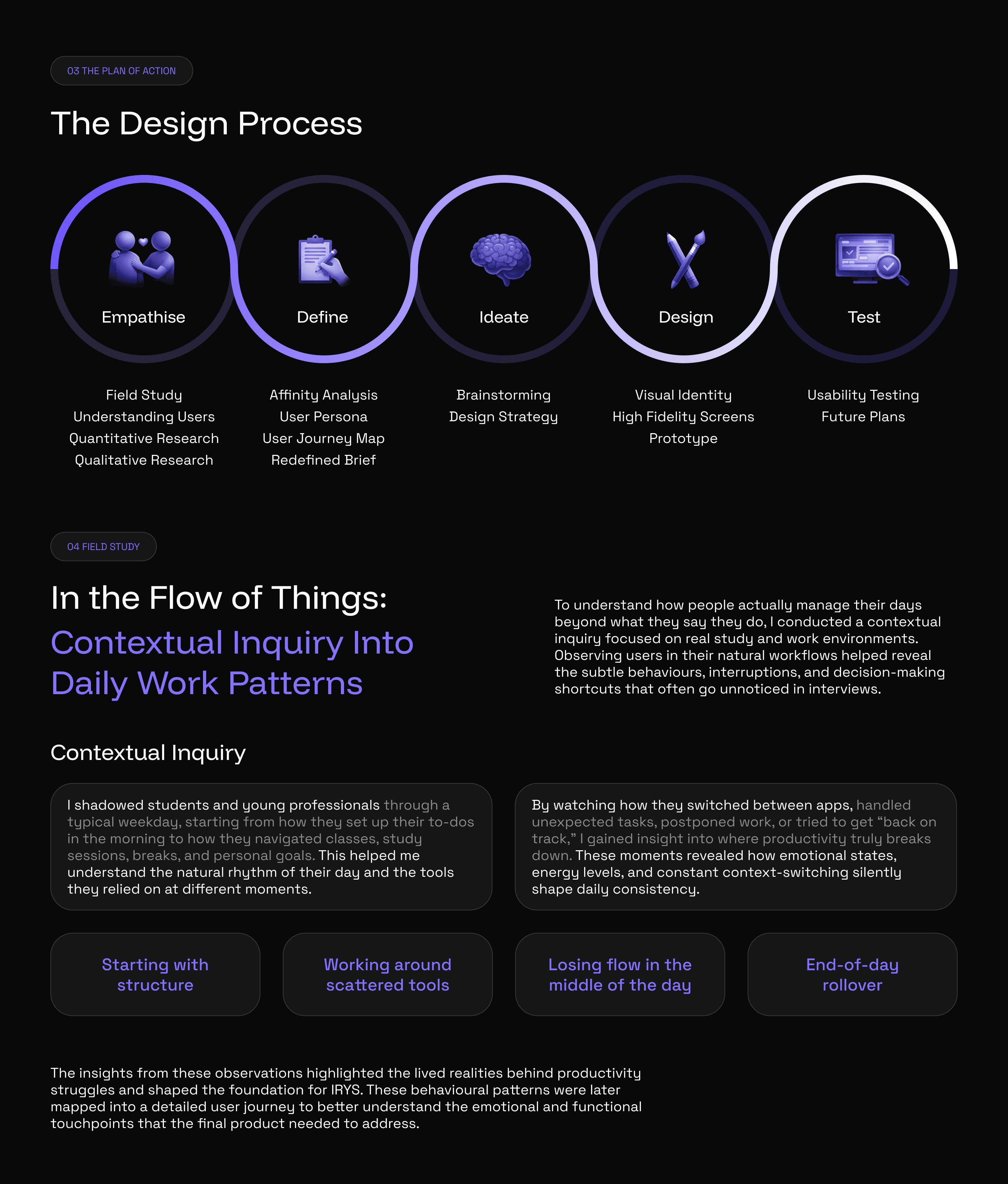
People often make schedules but struggle to follow them. They need support in execution, not just planning.

People uninstall apps because they feel too complex or demanding. IRYS needs to be adaptive and lightweight.

Mood and energy levels impact performance. AI suggestions need to adjust based on how the user feels.

Users drop habits after a streak breaks. Flexible habit systems that adapt to real life are essential.

Postponed tasks create guilt loops. App must reframe failure as a learning opportunity.

Tracking habits alone feels dry. Emotion and personalization make consistency significantly stronger.

Too many task apps exist. Users want one central intelligent system, not multiple apps that need to be updated.

Data alone feels meaningless. Users want personalised insights wrapped in simple understandable stories.

User Survey

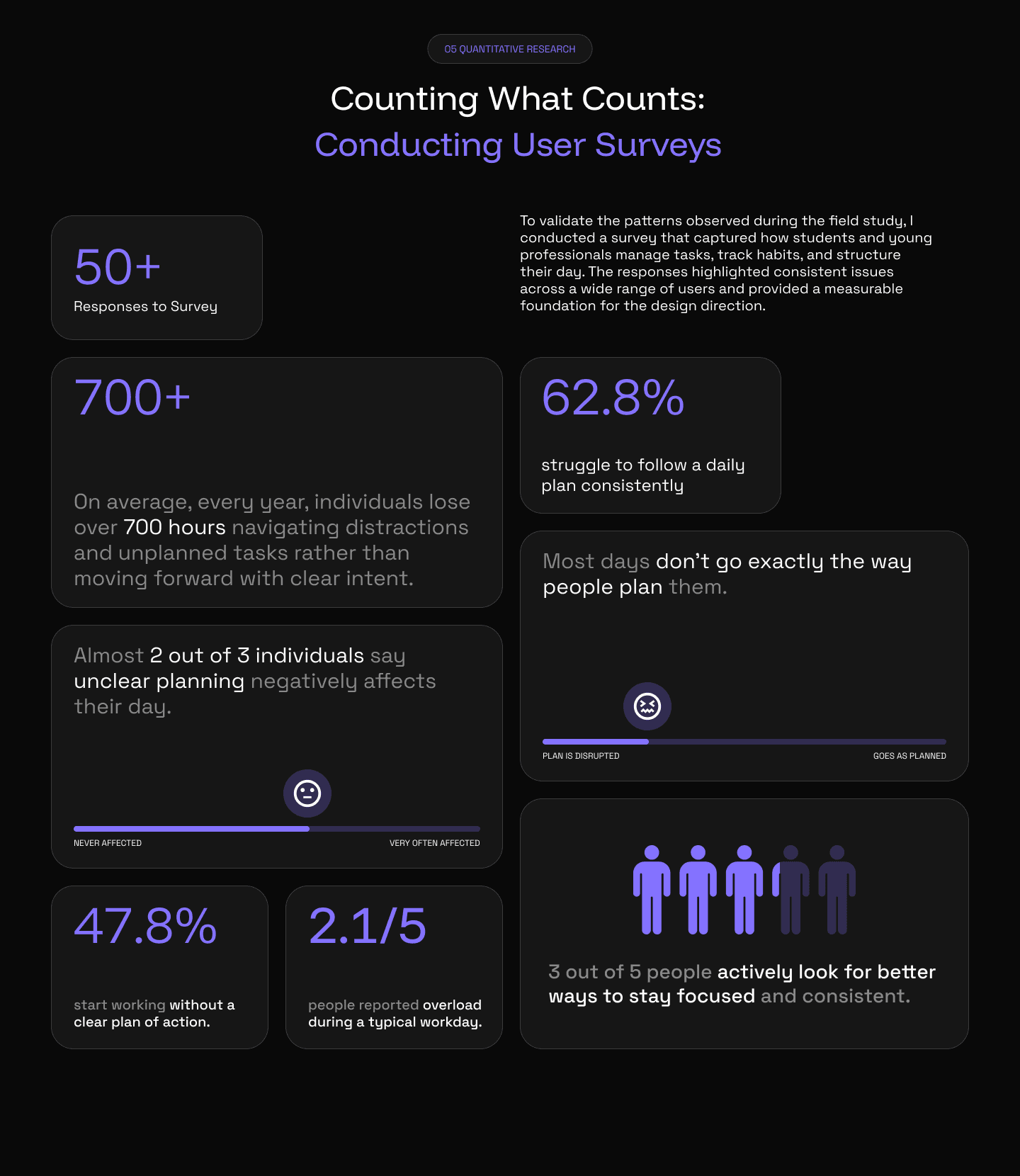
47%

of tasks

are forgotten if not written down or tracked.

Upto

35%

Productivity increase on using productivity apps.

2

hours or more

are spent a day deciding what to work on, not actually working.

68%

of college students

report struggling with building consistent habits despite wanting structured routines.

The data shows motivation is not the main issue. Execution and consistency are.

Current apps still rely on manual planning, which causes drop off.

Solution Overview

  • Reduces manual task maintenance with adaptive AI support

  • Tracks habits and productivity patterns to suggest improvements

  • Blends visual task boards with intelligent nudges for momentum

  • Helps users stay consistent rather than just organized

Reframing the Problem

“How might we leverage AI to create a task management and habit tracking system that promotes personal growth, adapts to user context, and builds long term consistency?”

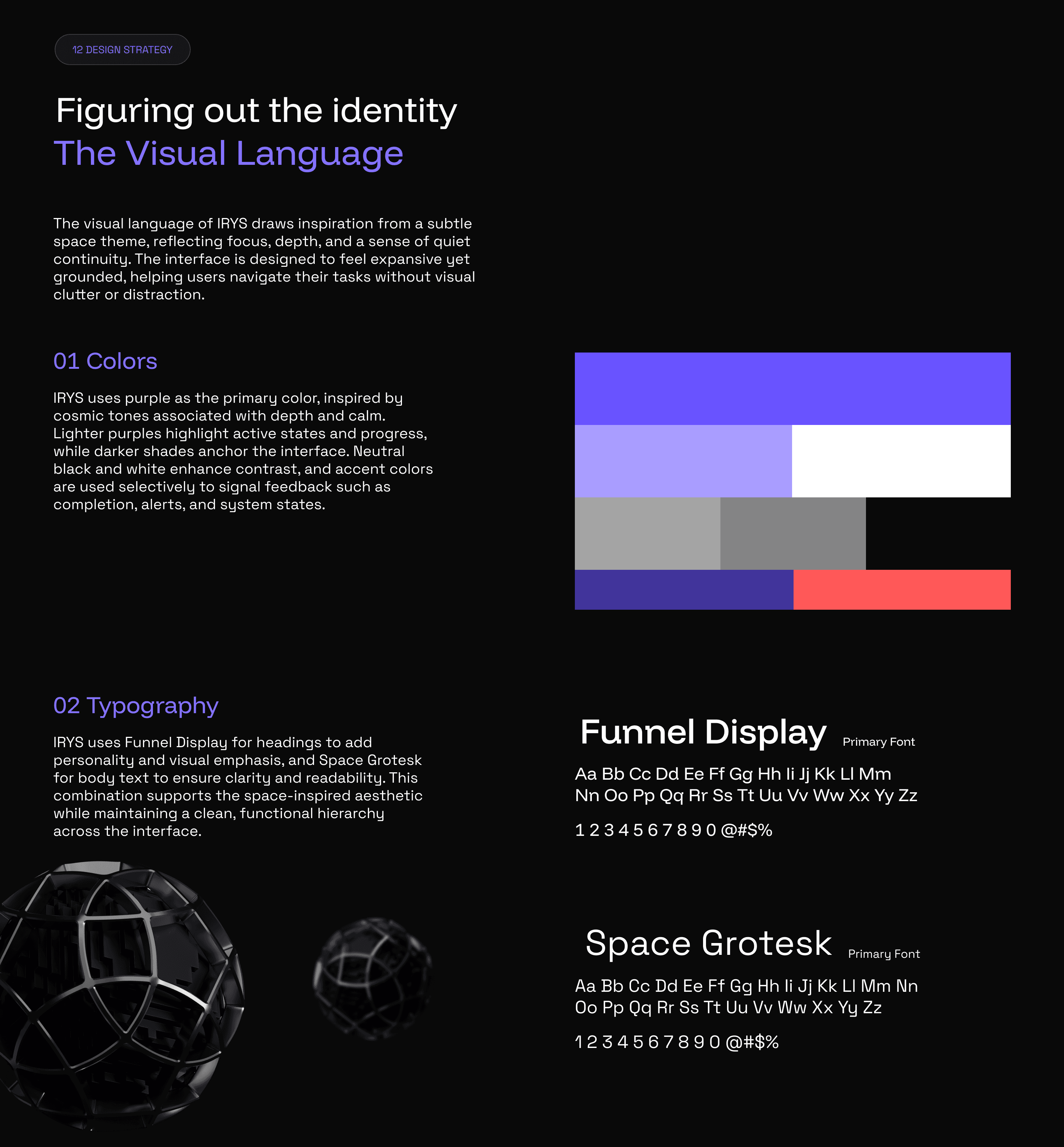
Visual Identity

Funnel Display

Primary Font

Aa Bb Cc Dd Ee Ff Gg Hh Ii Jj Kk Ll Mm Nn Oo Pp Qq Rr Ss Tt Uu Vv Ww Xx Yy Zz

1 2 3 4 5 6 7 8 9 0 @#$%

Primary Font

Space Grotesk

Aa Bb Cc Dd Ee Ff Gg Hh Ii Jj Kk Ll Mm Nn Oo Pp Qq Rr Ss Tt Uu Vv Ww Xx Yy Zz

1 2 3 4 5 6 7 8 9 0 @#$%

Context

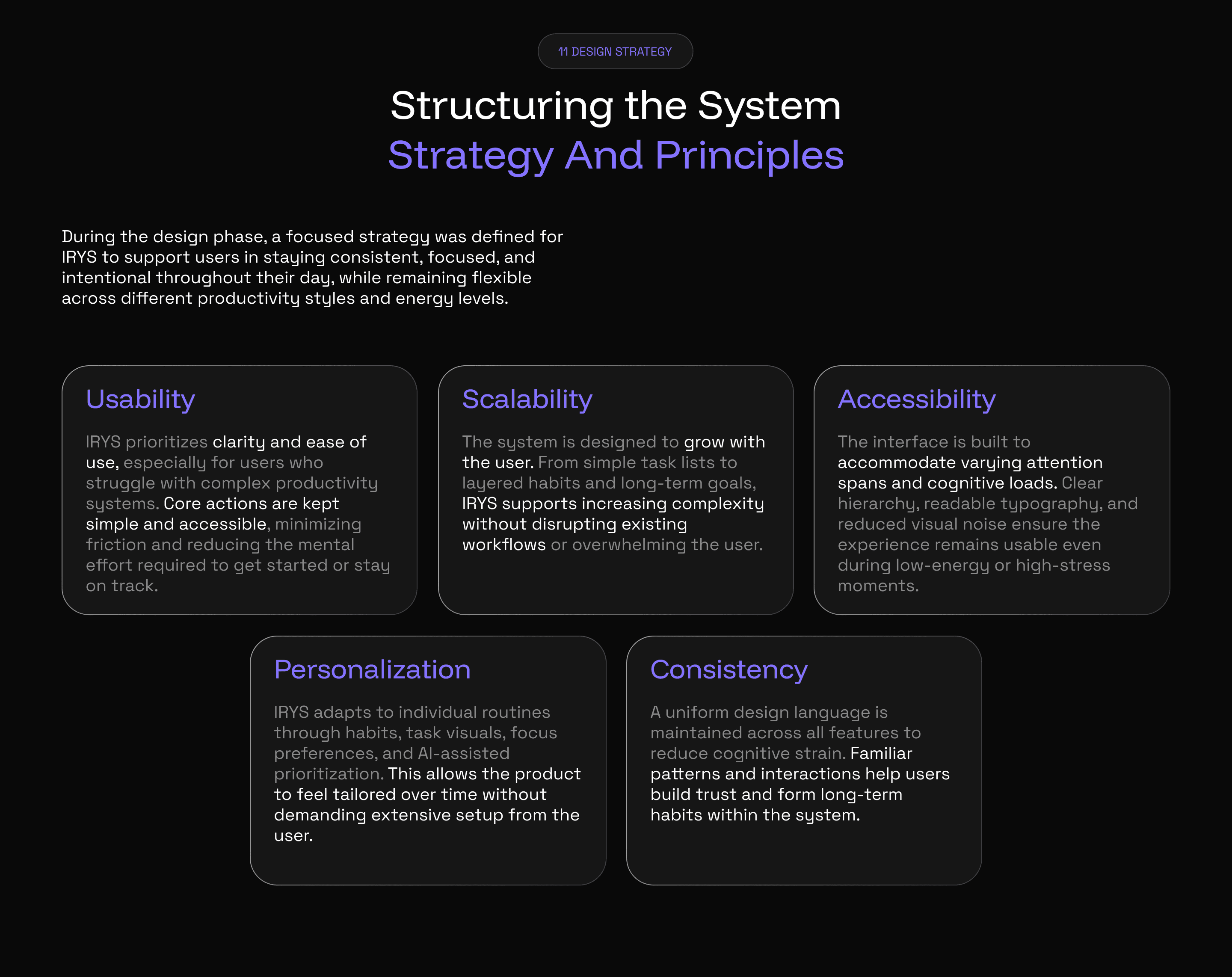
People rely on several tools to stay productive, yet still find it hard to remain consistent over time. Most apps focus on tracking progress or checking off tasks, without addressing the behavioural side of motivation and habit-building. This creates a fragmented experience where productivity feels mechanical rather than meaningful.

Objective

IRYS was built to bring structure and reflection into one space. It helps users organize tasks, track habits, and understand their work patterns through adaptive feedback. The goal was to design a system that supports intentional, lasting productivity instead of short bursts of efficiency.

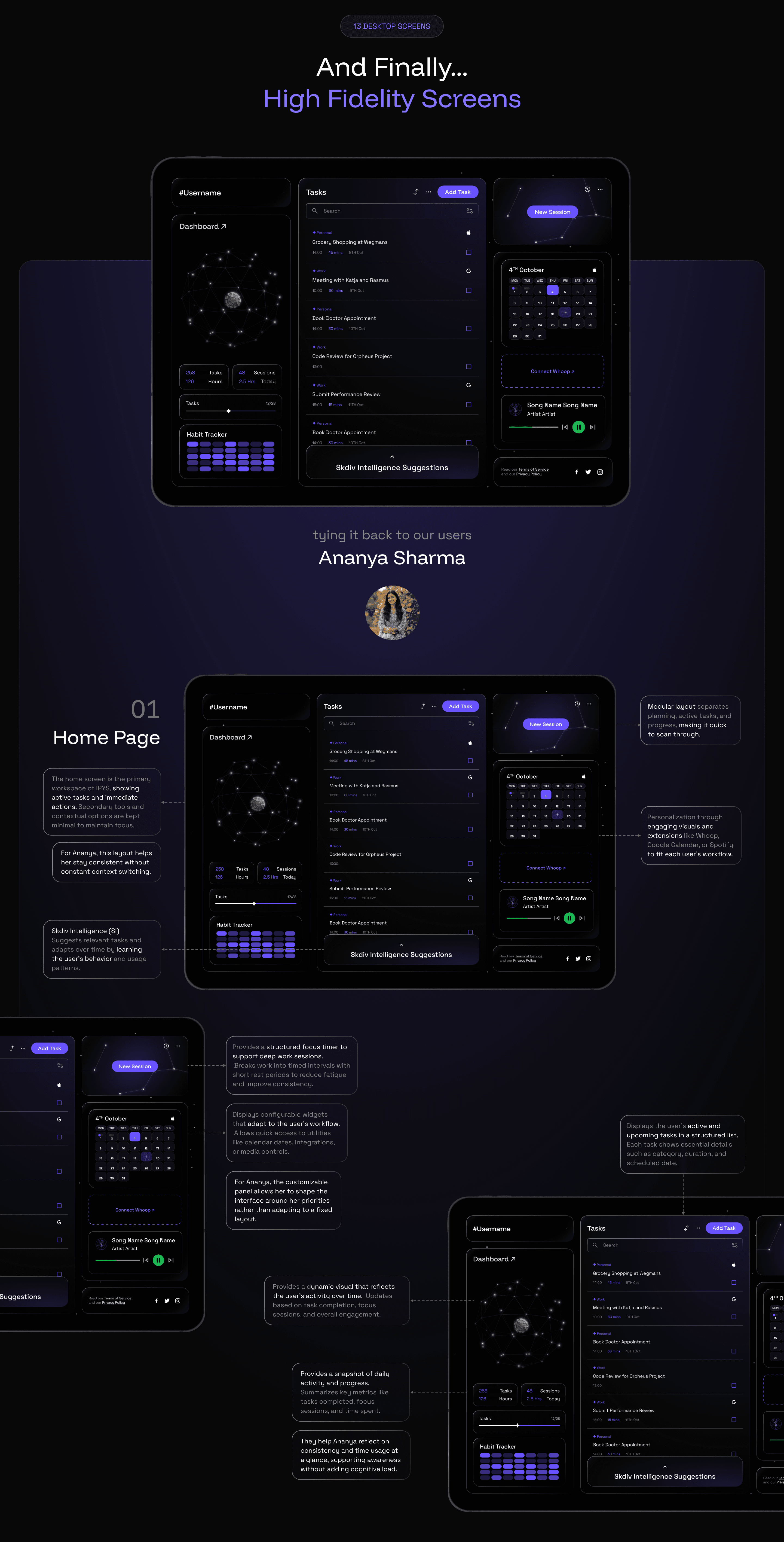
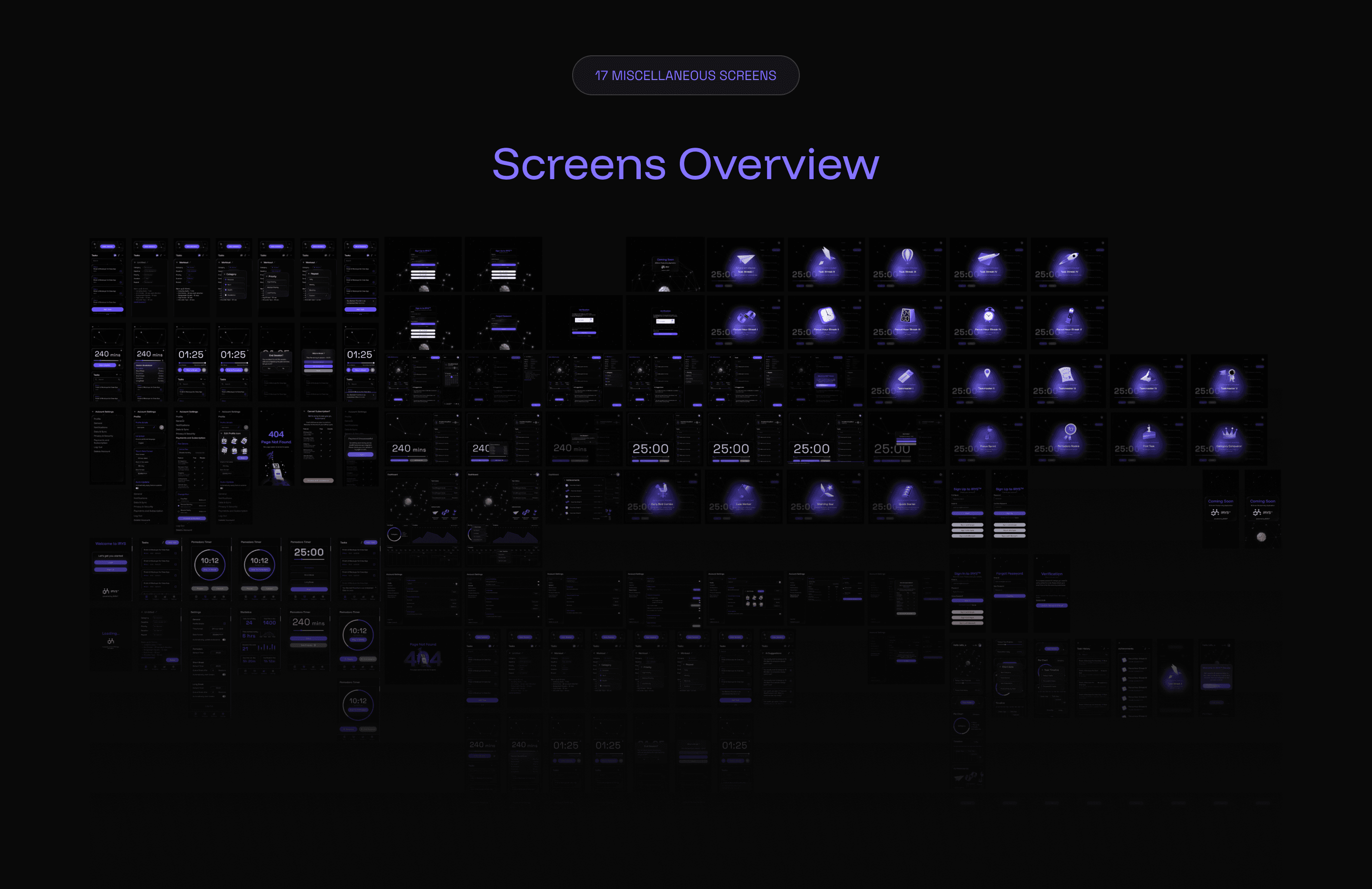
Desktop Screens

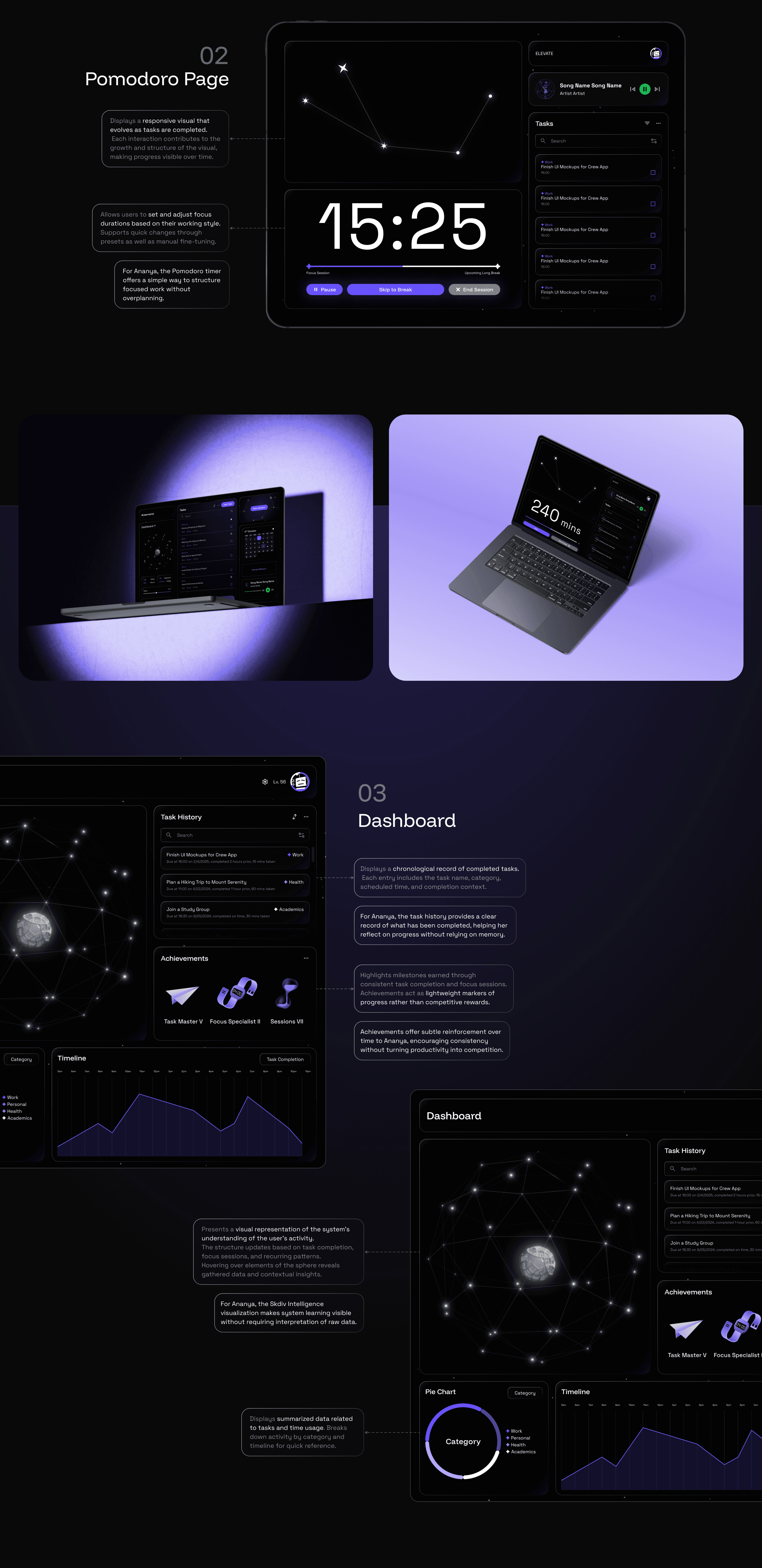
AI interactive Visualization

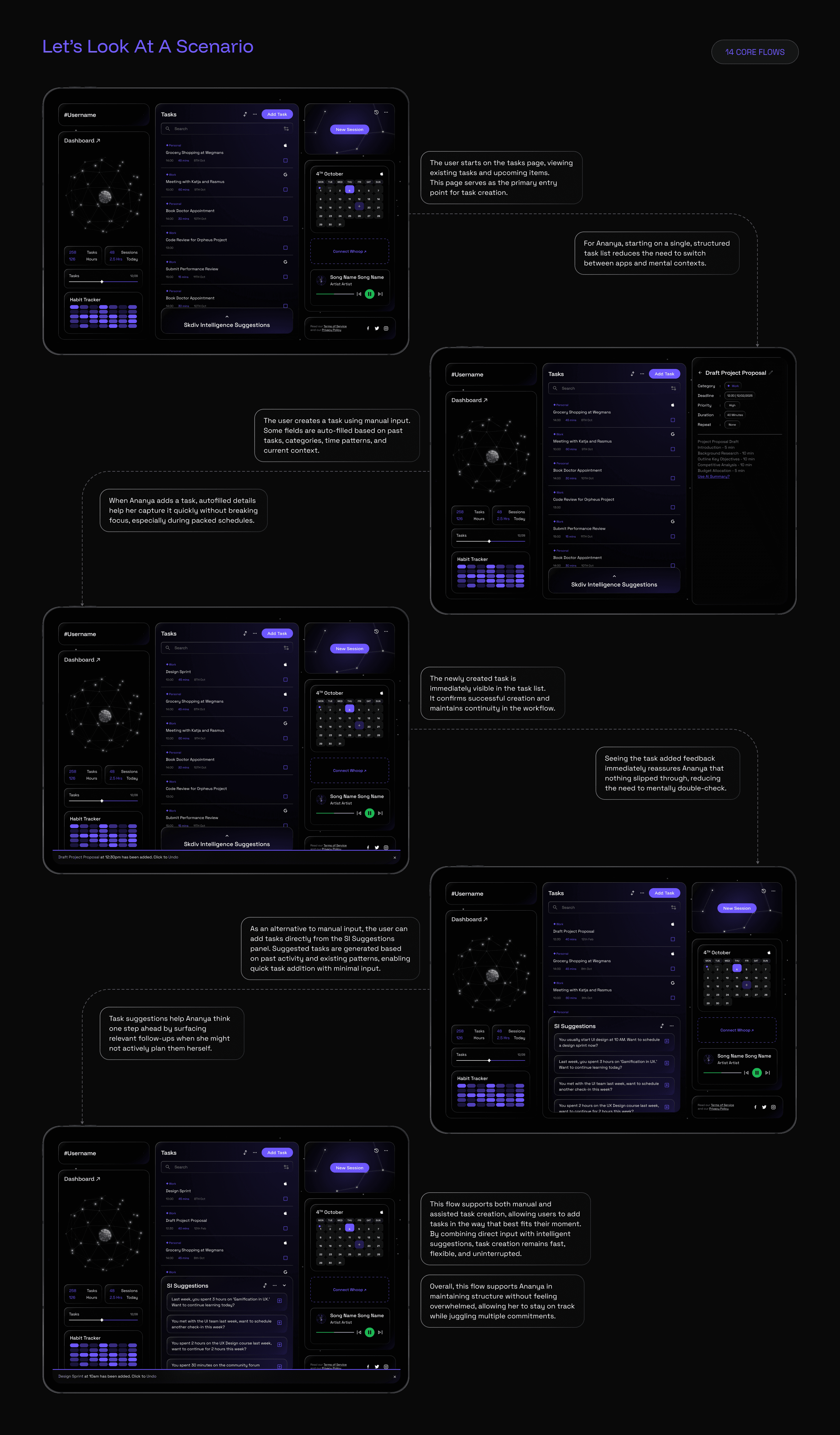
Task Panel with easy task managemnt

Pomodoro Timer Prompt

Modular Dashboard with spotify whoop and calendar integrations

Collapsible Ai Suggestion Panel

statistics Overview

In progress Section

Home Page

Live Pomodoro Visual

Profile Section

Task Panel

Adjustable Pomodoro TImer

Pomodoro Timer

Dashboard

Interactive Skdiv Intelligence Visual

Statistics Charts

Task History Panel

Achievements Panel

Settings

Login and Sign up

Onboarding Sequence

Mobile Screens

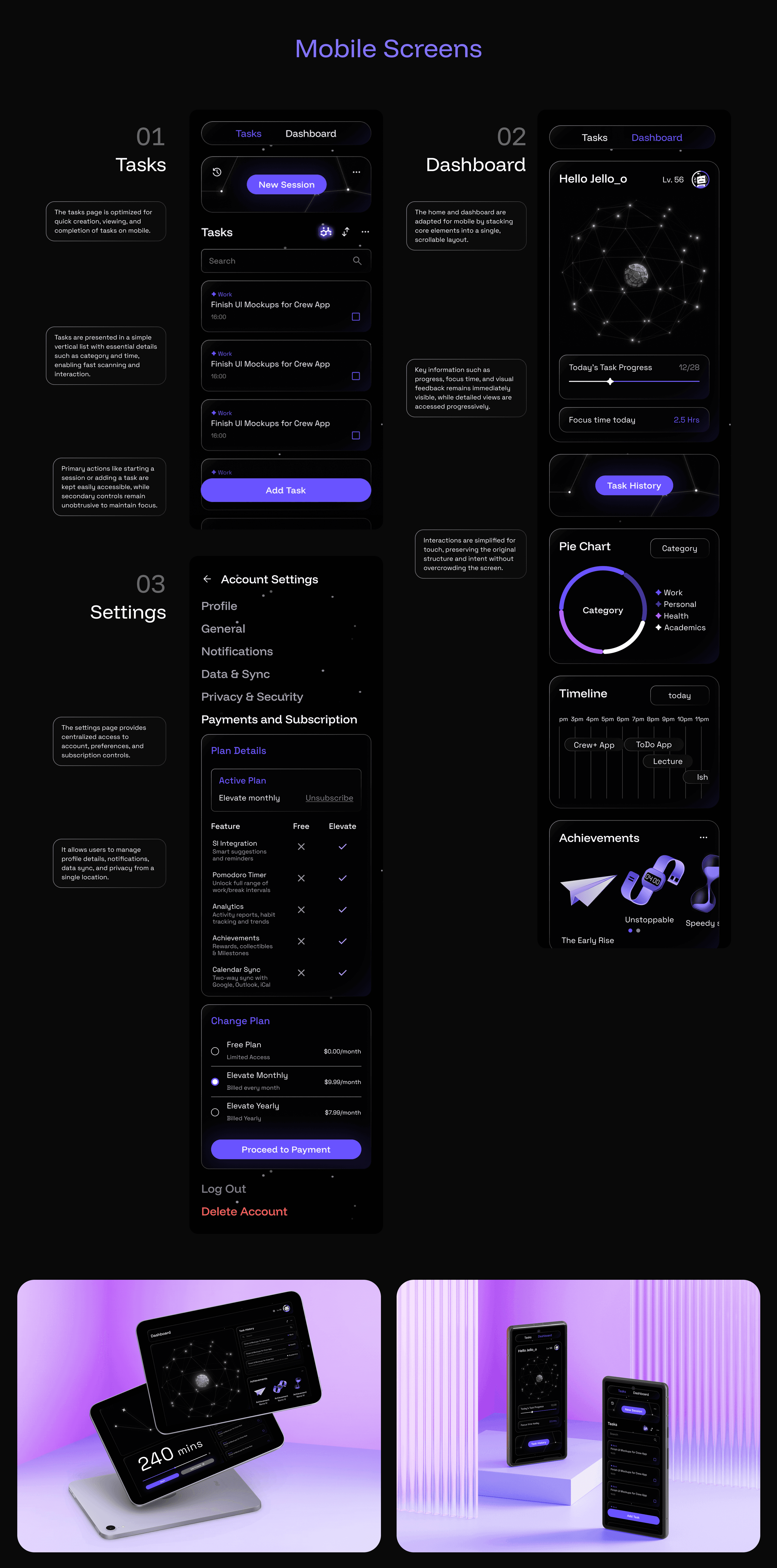
Tasks

Tabs To switch Pages

Tasks panel with ai panel and sorting options

Hovering button to add tasks

Dashboard

Interactive panel with statistics overview

Statistics Breakdown

Task history

Achievements collected

Settings

Login and Sign up

Website